Nihonbashi Bridge in Edo is a woodblock print in ink and colour on paper. It was produced between 1830-1832 and is 10inches tall by 14.5 inches wide. It depicts a landscape image of the central district of Edo and the Nihonbashi Bridge. The composition is interesting in that the image appears to be cropped and […]
The Japanese ukiyo-e print, Portrait of Chino Hyogo Seated at his Writing Desk, was made by the famous exponent of polychrome woodblock prints, Katsushika Hokusai, and is normally kept at the Tokyo Fuji Art Museum in Japan. The ukiyo-e print was popular in the nineteenth century with ukiyo-e meaning something like images of the floating world. In […]
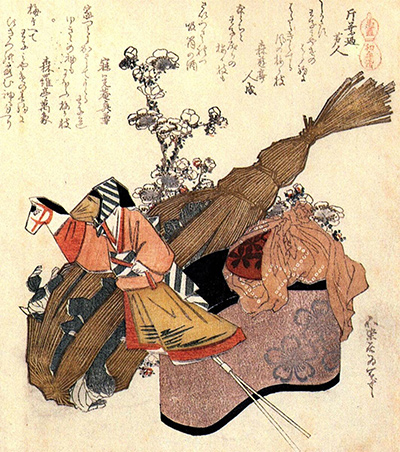
A Hand Puppet, A Straw Container And A Sake Cup is a delicately imagined still life painting by the Japanese artist Hokusai, who lived in Edo (now known as Tokyo) in the eighteenth and nineteenth centuries. This work of art depicts the three items described in the title, and it is executed using oil paints […]
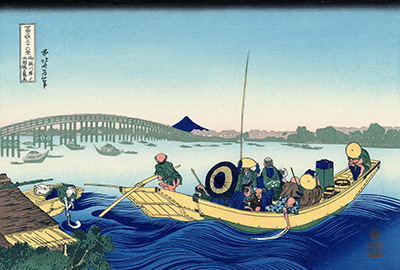
Sunset across the Ryogoku bridge from the bank of the Sumida River (1830) is a woodblock colour print genre painting created by Japanese artist Katsushika Hosukai (1760-1849). This particular painting is the twelfth view in his most famous work, the woodblock colour print collection entitled “Thirty-six Views of Mount Fiji”. Hosukai only started this collection […]
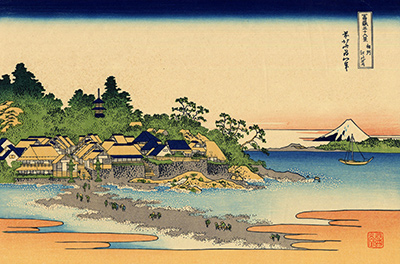
Enoshima in Sagami Province or Sōshū Enoshima, is a print that is found in Katsushika Hokusai’s series Thirty-six Views of Mount Fuji also known as Fugaku sanjūrokkei. The iconic artist was born during the Edo period in October 1670 in Edo District and died in May 1849. The print Enoshima in Sagami Province was produced […]
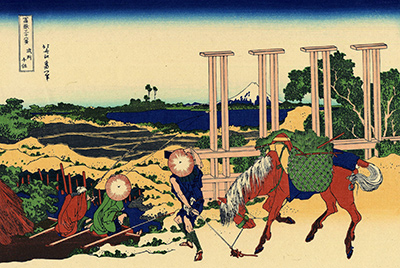
Senju in Musashi Province or Bushū Senju, is one Katsushika Hokusai’s prints from the famous series The Thirty-six Views of Mount Fuji also called Fugaku sanjūrokkei. Katsushika Hokusai was born on 31st of October, 1760 in the Japan Edo District and died on the 10th of May 1849. The print Senju Musashi Province was produced […]
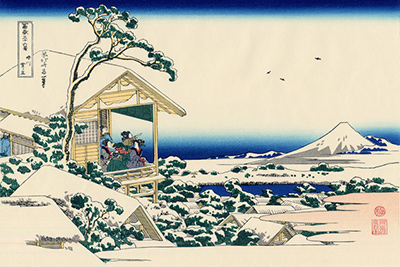
Hokusai’s print; Tea at Koishikawa – the morning after a snowfall, is a wonderful example of Hokusai’s ability to evoke an image of the changing nature of the environment. Hokusai highlights the effect of a single snowfall on the landscape; no surface escapes the simple white blanket. The picture shows a group of men and […]
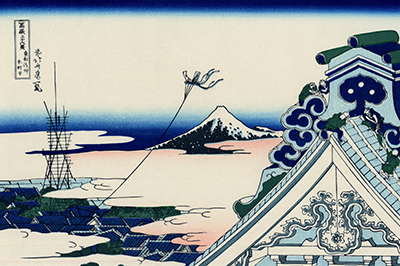
Asakusa Hongan-ji Temple in the Eastern Capital Edo is a view of Mount Fuji from the Tsukiji Hongan-ji temple in Tokyo. The print is one of a series of woodblock prints called Thirty Six Views of Mount Fuji. Despite its name, the series however has 46 blocks, since ten were added at a later date […]
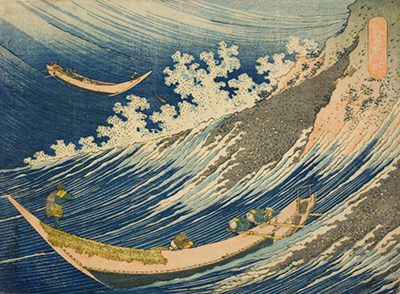
Choshi in Shimosa is a work on ink and paper by Hokusai, and it depicts one of the artist’s favourite themes: the ocean. Hokusai was born in Edo (which we now know as Tokyo) in 1760, and he died in the same region in 1849. During his lifetime he built up a reputation as one […]
Katsushika Hokusai was an influential Japanese artist who adopted various names during his career. Born in Tokyo around 1760, he was a painter of the Edo period (1603-1868), Edo being the old name for Tokyo, and became a printmaker and woodblock printer or ukiyo-e. Having studied carving and block printing, his early work focused on […]